Brushing around brackets
Brush for two minutes with fluoride toothpaste, morning and night, and after meals when possible. Angle a soft brush above and below every bracket and gently along the gumline.

Patient guide · Braces
Daily cleaning, safe foods, band colors, and what to do if a bracket or wire comes loose.
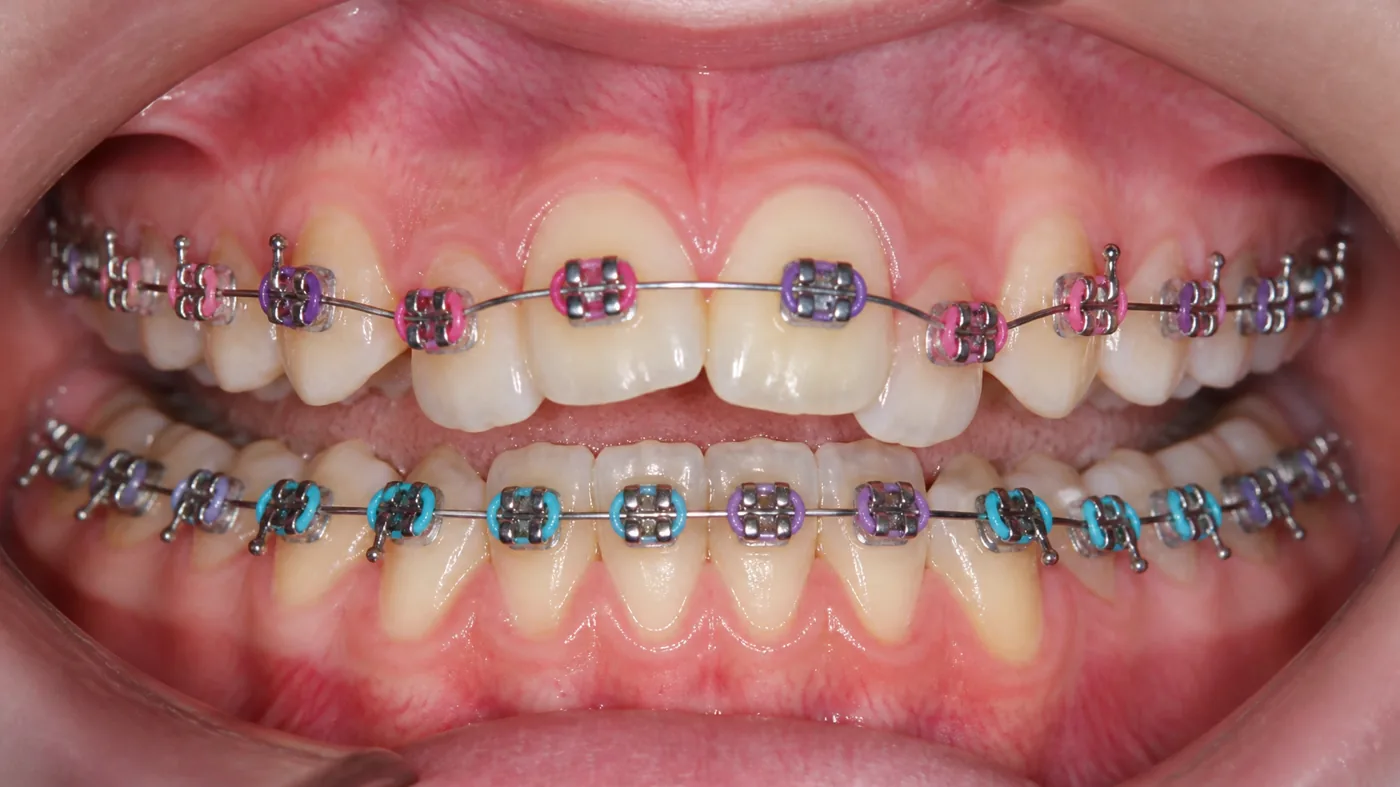
Your exact sequence is set by your bite.
Brackets are bonded to one arch or both. Your doctor chooses the order based on your bite and what needs to move first.
Light, flexible wires straighten crowded or rotated teeth and level the arches. Changes can show early, but the teeth still need time to move safely.
The focus shifts to how your maxillary (upper) and mandibular (lower) teeth meet. Stiffer wires, elastics, or springs guide your bite into place.
Small adjustments fine-tune spacing and your final occlusion (how your teeth fit together).
When active treatment is complete, retainers hold the teeth in position. Your written plan lists the retainers that come with treatment. Follow the wear schedule your doctor gives you. Read the retainer care guide
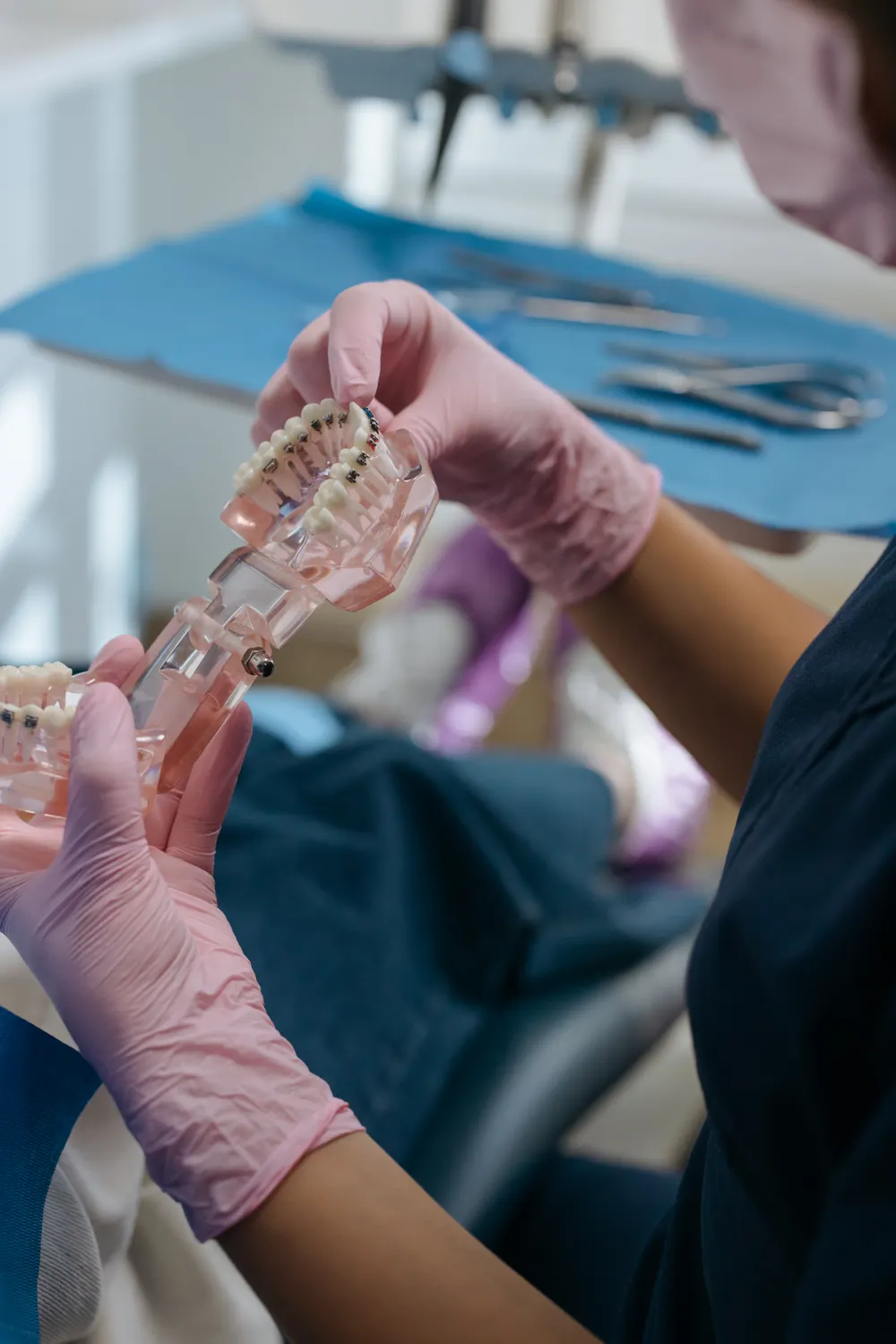
Records at every checkpoint. Orthodontic records include initial X-rays before treatment, progress X-rays during treatment, and final X-rays when active treatment is complete. Complete recommended general dentistry before braces begin, and continue regular exams and cleanings during treatment.
Hover over a name, or tap it on a phone, to light up that part.
Small metal or ceramic squares bonded to the middle of each tooth. They are the handles your doctor uses to guide each tooth.
The thin wire that runs through every bracket. It gently pushes the teeth toward their new places, and your doctor changes it as treatment moves along.
The small rubber rings that hold the wire in each bracket. This is the part you pick the color for.
On the back teeth, a bonded tube (or sometimes a metal band) holds the end of the wire.
Good cleaning and food choices keep brackets secure and teeth healthy while they move.
Brush for two minutes with fluoride toothpaste, morning and night, and after meals when possible. Angle a soft brush above and below every bracket and gently along the gumline.
Slide an interdental brush under the archwire to clear food between brackets, then floss once a day with a floss threader or orthodontic floss.
Small elastics hold the wire into each bracket. Choose one color, a pattern, school colors, holiday colors, or a new combination at an adjustment visit.
Be creative. The color choice does not change how the braces work.
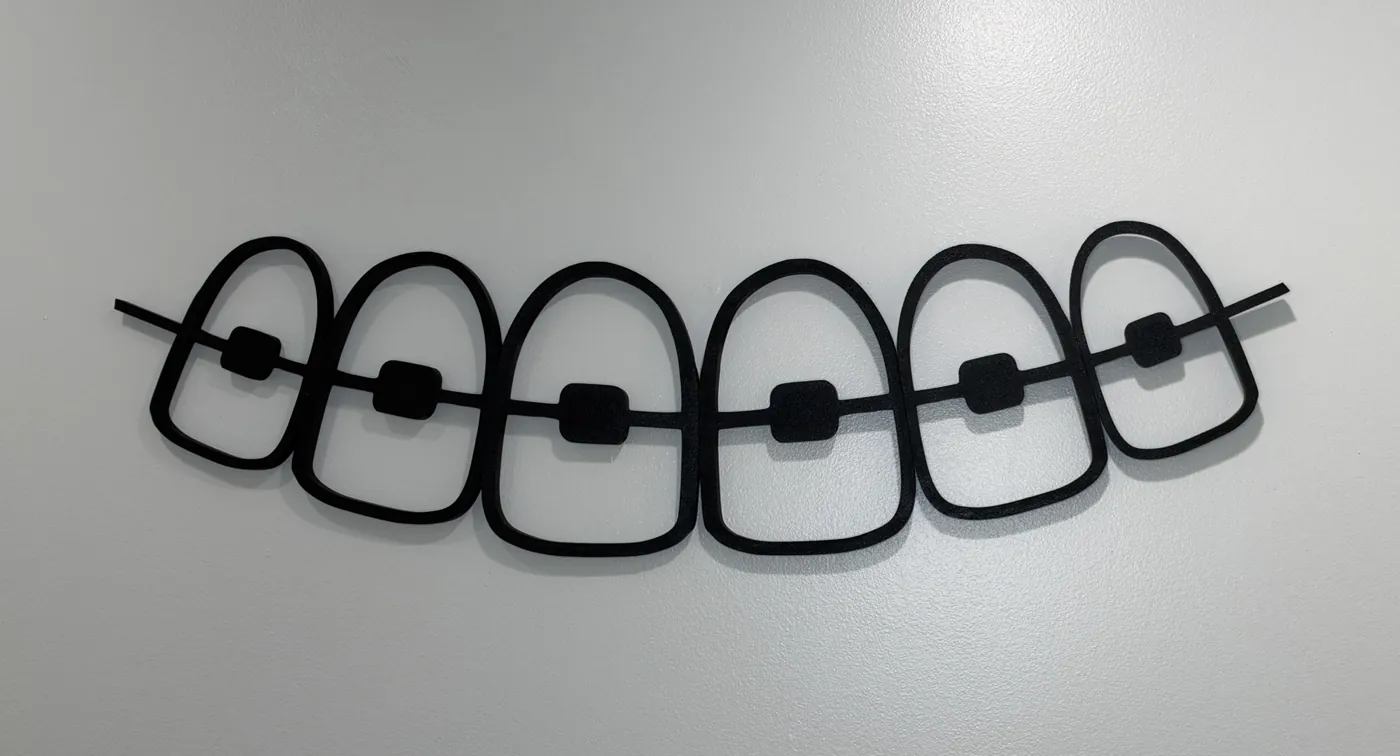
Based on the six-tooth archwire sculpture in our Downey waiting room.
Tap a food to see if it's braces-safe, and why.
Brush along with our timer: thirty seconds on each part of your mouth, with a nudge when it is time to move on.
Most of these you can handle at home. If a step doesn't help, call or text the office.
Why acetaminophen: in some animal studies, ibuprofen and similar anti-inflammatory medicines slowed tooth movement while acetaminophen did not, and in patients both ease braces soreness about equally (Kaklamanos et al., Orthodontics & Craniofacial Research, 2020; Neves et al., Korean Journal of Orthodontics, 2026). Follow the label and never take more than it says. Ask your physician or pharmacist first if you have liver problems, another health condition, or take other medicines.
Call or text (562) 904-6930. Visits are by appointment on set office days each month.
For uncontrolled bleeding, major facial trauma, or trouble breathing or swallowing, call 911.