Patient guide · Clear aligners

Aligner care

Daily wear, cleaning, fit checks, chewies, and when to call.

Clear aligner fully seated on the upper teeth, with attachments visible under the plastic
On your device · Private

Open your Aligner Day Tracker

See today's aligner, your next change day, and when your set ends. Saves in this browser only.

Open your Aligner Day Tracker

Treatment phases

Treatment length depends on your bite, how far the teeth need to move, tracking, and daily wear.

  1. Scan and plan

    An intraoral scan records the teeth. Dr. Julian Restrepo reviews the bite, plans the movements, and orders a custom series of trays.

  2. First series

    Each tray moves the teeth a small step. Wear the trays 20 to 22 hours a day. Most patients change every 7 days and some every 14 days. Follow the schedule your doctor gives you.

  3. Progress checks

    Your doctor checks tray fit, attachments, bite, and tracking. Bring the current tray so the fit can be checked in the mouth.

  4. Possible refinements

    A refinement is a new set of trays made after the first series to fine-tune teeth that need more movement. Refinements are a normal opportunity to improve the result, not a sign that treatment failed.

  5. Retainers

    When active movement is complete, retainers help hold the result. Your written plan lists the retainers that come with aligner treatment. Follow the wear schedule your doctor gives you. Read the retainer care guide

Parts of your aligner treatment

Hover over a name, or tap it on a phone, to light up that part.

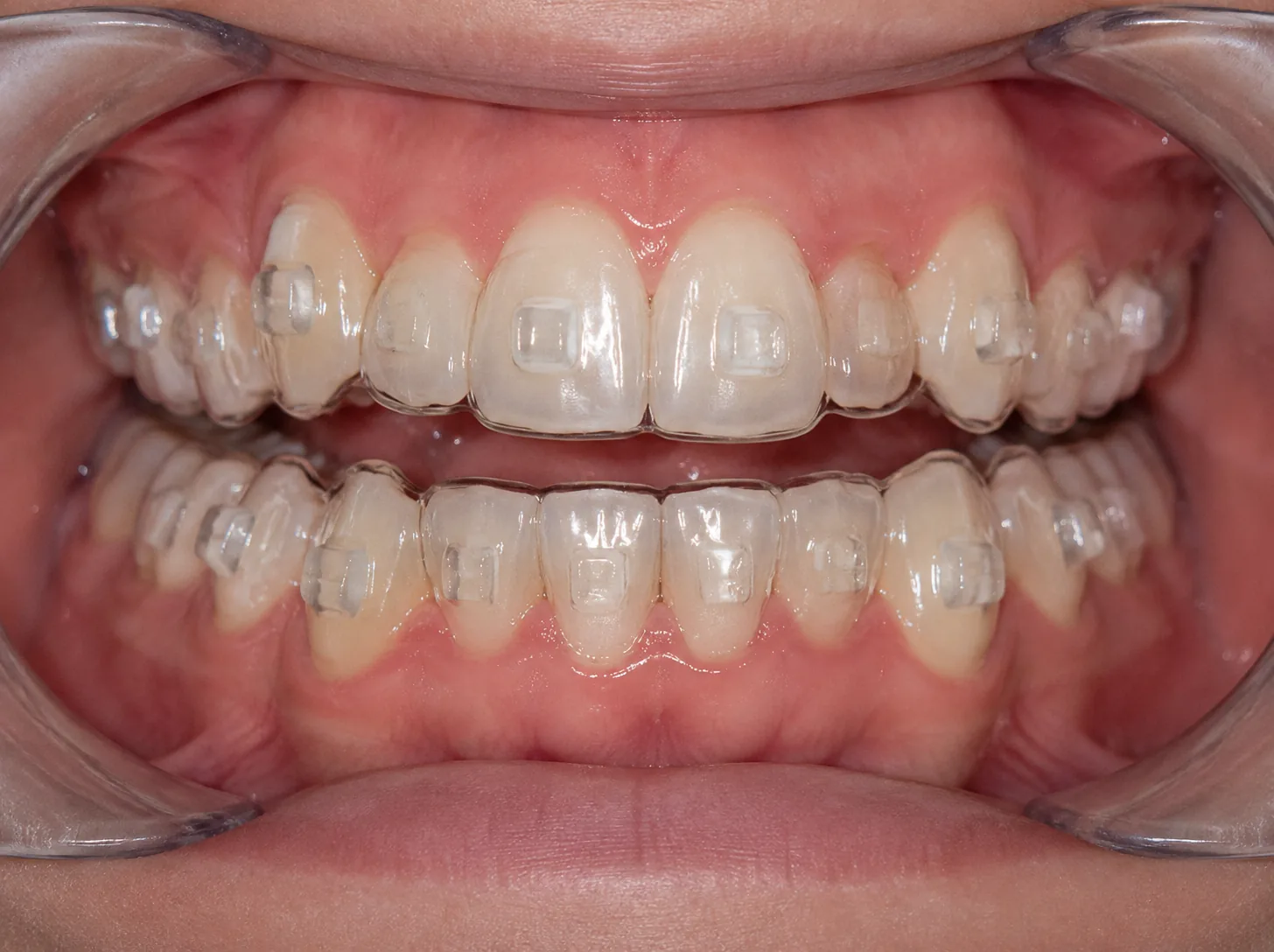
Clear aligners with attachments on crowded, rotated teeth, front view
  1. Aligner trays

    Thin, clear plastic shaped to your teeth. Each tray moves them a small step, and you switch to the next one on the schedule your doctor gives you.

  2. Attachments

    Small composite bumps bonded to a few teeth. The tray grips them to make movements that plastic alone can't.

  3. Chewies

    Soft foam rolls you bite on to help a tray seat fully. Use them exactly as instructed.

    Not shown in the photo.

Wear and clean

Aligners only move teeth while they are worn.

20 to 22 hours

Take the trays out only for meals, snacks, drinks other than plain cool water, brushing, flossing, and cleaning the trays. Do not change early. If wear time is missed, stay in the current tray and call if you are unsure whether the change day should move.

Clean and store

Rinse with cool or lukewarm water. Brush gently with a separate soft toothbrush and clear mild liquid soap. Skip abrasive or whitening toothpaste. Never use hot water. Store aligners in their protective case whenever they are out.

Enjoy with trays out

  • Meals and snacks without the trays
  • Drinks other than plain water only while trays are out
  • Brushing and flossing before trays go back in
  • A mouth rinse with water if brushing must wait briefly

Avoid with trays in

  • Food or chewing gum
  • Coffee, tea, soda, juice, and alcohol
  • Hot water or hot drinks that can distort the plastic
  • Leaving trays loose, wrapped in a napkin, or within reach of pets

Check the fit every day

Tracking means each tooth is moving into the space built into the tray. Look from the front and both sides, especially at the biting edges of the front teeth.

A thin line can appear when a new tray is first inserted, but it should improve as the tray seats. Do not move to the next tray while a visible gap remains.

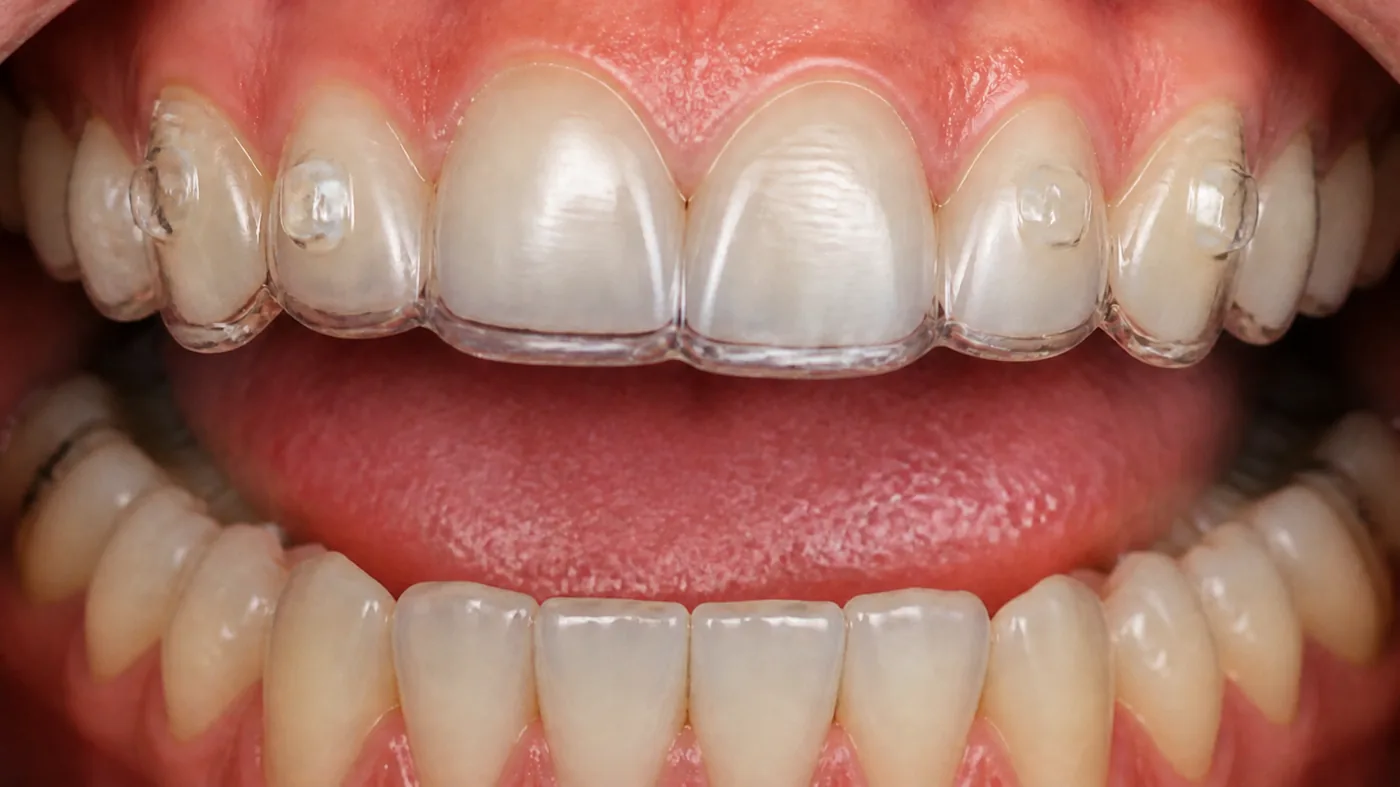
Clear aligner fully seated on the upper teeth, with attachments visible under the plastic
Good tracking

Fully seated

The plastic follows every tooth closely, with no visible air space at the biting edges.

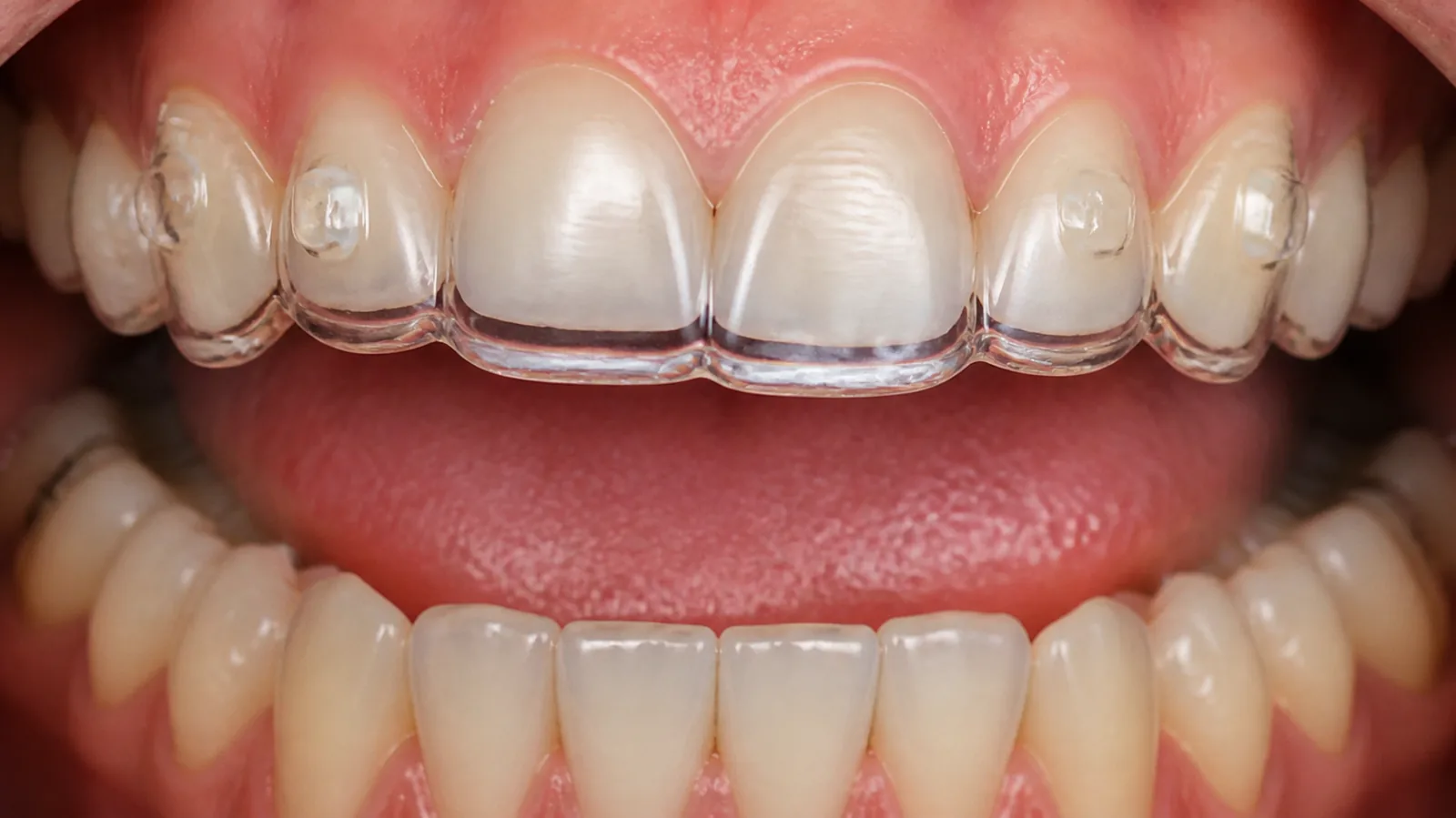
Clear aligner with a thin air gap along the biting edges of the two upper front teeth, attachments on neighboring teeth
Mild off-tracking

Small edge gap

Stay in the current tray longer until it seats fully. Use chewies as instructed and keep checking the gap. Call if it does not close.

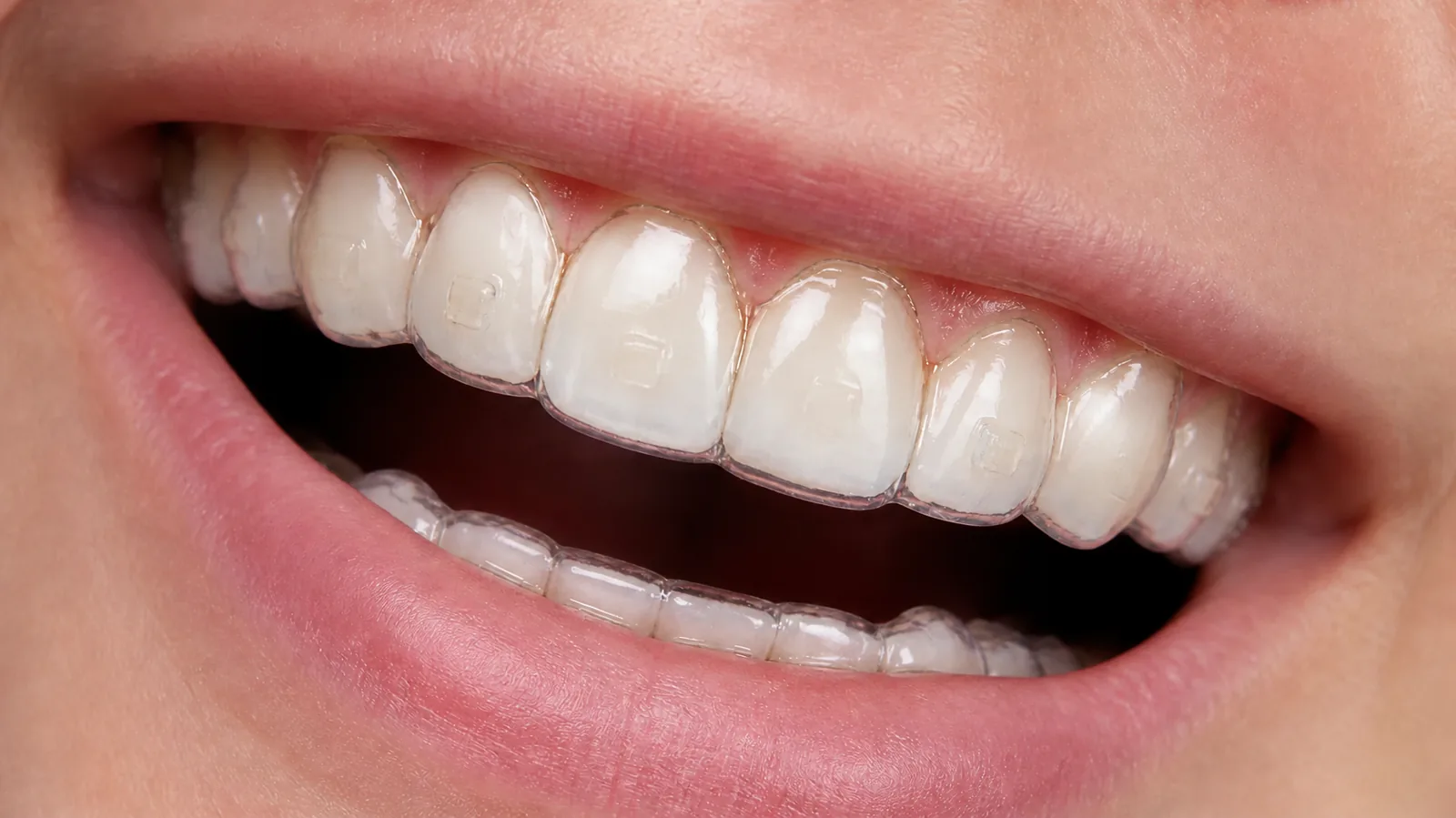
Clear aligner lifted off the upper front teeth, with air gaps along the biting edges and attachments on two teeth
Off-track

Visible gaps remain

Do not advance. Keep the current and previous trays, and call the office for instructions.

Use chewies to help the tray seat

With the aligner in place, bite gently on the chewie over each area that is not fully seated. Move it from tooth to tooth rather than chewing in one spot. Use it exactly as instructed, clean it after use, and replace it when it starts to break down.

Two minutes, twice a day

Brush along with our timer: thirty seconds on each part of your mouth, with a nudge when it is time to move on.

Troubleshooting

Keep the current and previous trays. Do not skip ahead or attempt a home repair.

Attachment falls off
If the tray still seats fully, keep wearing it on schedule. One or two missing attachments can usually wait until your next visit. Call or text if several come off in one area or the tray stops seating. Don't use glue or reshape the tray.
Tray is lost
Do not skip ahead. Keep your previous trays and call. Your doctor will tell you whether to wear the previous tray, move forward, or wait for a replacement.
Small crack
If the tray remains in one piece, has no sharp edge, and still fits, keep wearing it and call for instructions. Do not bend, glue, or cut it.
Split, sharp, or warped tray
Stop forcing it into place. Keep the damaged tray and the previous tray, then call before changing anything.
New tray will not seat
Confirm that it is the correct tray and facing the right direction. Press it in with clean fingers and use a seating aid if instructed. If a gap remains, return to the last tray that fits comfortably and call. Do not jump ahead.
Missed wear time
Stay in the current tray. Call if you are unsure whether the change day should move or whether more time is needed.

Call now or wait

Call or text (562) 904-6930. Visits are by appointment on set office days each month.

Call the office

  • Several attachments come off in one area
  • A tray is lost, split, sharp, or warped
  • A tray does not seat or a gap does not improve
  • Pain is severe, getting worse, or comes with swelling
  • You are unsure whether to move forward or back

Usually can wait

  • Expected pressure when a new tray is inserted
  • One attachment comes off and the tray still seats fully
  • A thin gap that improves as a new tray seats
  • A small crack when the tray stays in one piece, has no sharp edge, and still fits, once you've called or texted

For uncontrolled bleeding, major facial trauma, or trouble breathing or swallowing, call 911.

Call(562) 904-6930Text(562) 904-6930